

Pontevedra and its river offer historical walks, nature, and maritime cuisine. This two-day itinerary organizes visits by day to help you plan a getaway in the area.
2 days on the Ría de Pontevedra
How to Get There
Day 1
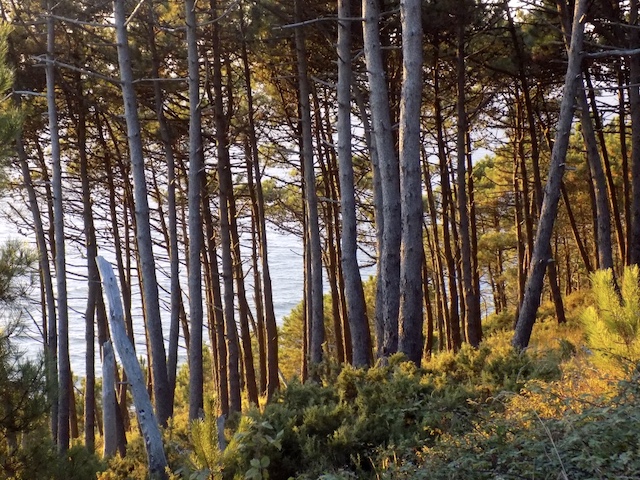
- stroll through the Natural Space of Cabo Udra (see directions below).
- recharge in Bueu, and take the opportunity to visit its picturesque port, and nearby the Massó Museum, an old cannery.
- visit the exteriors and gardens of Pazo Lourizán, included in the Camellia Route. The vast garden features trees of great interest, in addition to a granary, a press, and a Mirror Grotto, among other points of interest.
- Explore Pontevedra**. Don't miss: the Sanctuary of the Virgin Peregrina, probably the building with which the people of Pontevedra most identify, where the symbolism related to the Camino de Santiago stands out, as one of its stages ends-begins at the feet of "la Peregrina".
The Basilica of Santa María la Mayor, whose main façade is one of the best examples of Plateresque architecture in Galicia.
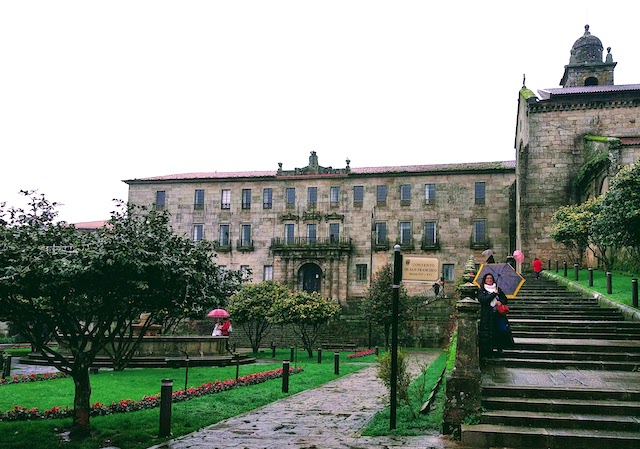
And the ancient guild squares: the Ironworks, where the Church of San Francisco stands out, whose attached door is the only one preserved from the old wall; the Plaza de la Verdura, where one of the Tourist Offices is located, and the Plaza de la Le, whose cruceiro makes it one of the most emblematic in the city.
- In Combarro, let yourself be surprised by one of the most beautiful ethnographic complexes in the Ras Baixas. Just in its small old town, you will see more than 30 hrreos, many of them by the sea, and at least 2 cruceiros, in addition to the traditional houses, many of which have been converted into shops.
- Lastly, relax in Sanxenxo or Portonnovo, with views of the Ons Islands.
Day 2
- Devote the morning to the Pontevedra Museum (Ruins of Santo Domingo included). If you’re not into museums, stroll through the Island of Sculptures, a pleasant park by the Lrez River.
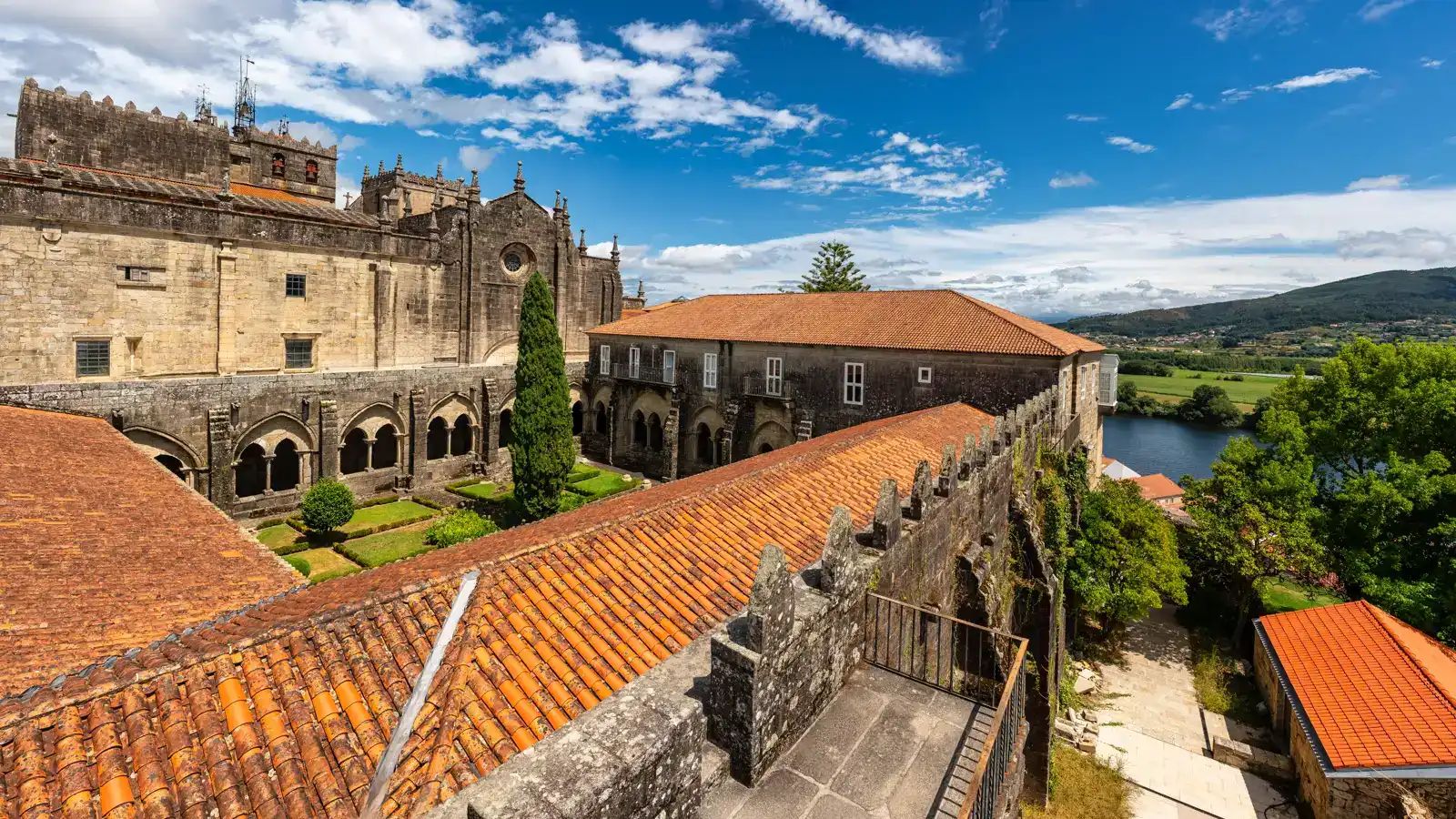
- Visit the Monastery of Poio, where you can see one of the largest hrreos in Galicia, a spectacular staircase, and two very different cloisters: the one for Processions, with gardens, which served as the distributor for the dependencies, containing 3 sundials, and the one for the Cruceiro, decorated with a wonderful mosaic representing the stages of the French Camino de Santiago.

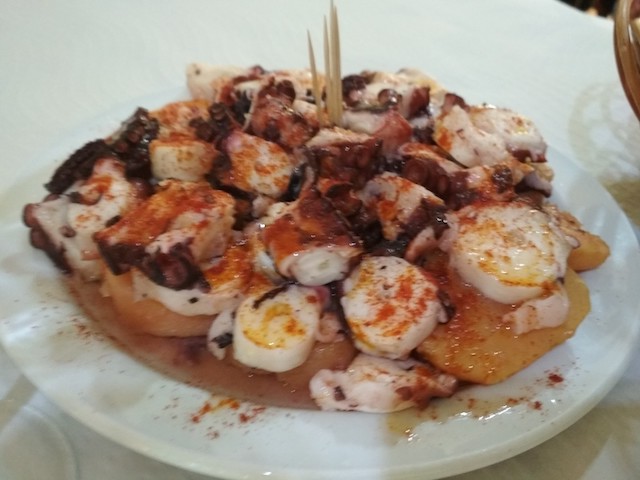
In the Abastos Market, you can eat very, very fresh food. In two places on the upper floor, they prepare the freshly bought seafood from the ground floor, all washed down with good wine! The places are Olmo and Praza.
What to eat
We recommend octopus, cuttlefish, or calamari tapas, or some fish dish. Turbot, sea bass, and gilt-head bream are highly prized in this area.
If you prefer meats, a simple churrasco, either beef or pork. As for wines, we are in the D.O Rias Baixas region. If you prefer red, the D.O Ribeira Sacra wines are of high quality.
Practical information
- in Cabo Udra, the Blue trail, which is marked, has a route of about 3 hours. If you want to make it shorter, start at Ancoraduora Beach and reach Pedron Beach, passing through Mourisca. There is parking very close to the first one.
- in Pontevedra, look for a place to park on the other side of the river, or in one of the parking lots.
- Pontevedra is a flat city, and very accessible for walking.
- To visit the Ons Islands (only in season) a prior permit is required.. Boats leave from Bueu, Sanxenxo, or Portonovo. Two companies cover the regular trips: Piratas de Nabia and Mar de Ons.
The best experience
"Visit the Pazo de Rubianes. Its gardens have been declared of International Excellence, the interiors of the pazo are magnificent, and you can end the visit with a tasting of albariño from its own vineyard. What more could you ask for?"
GABRIELA GARCIA
Travel Blogger
The best accommodation
Credits for the main image: "A Peregrina", Pontevedra