
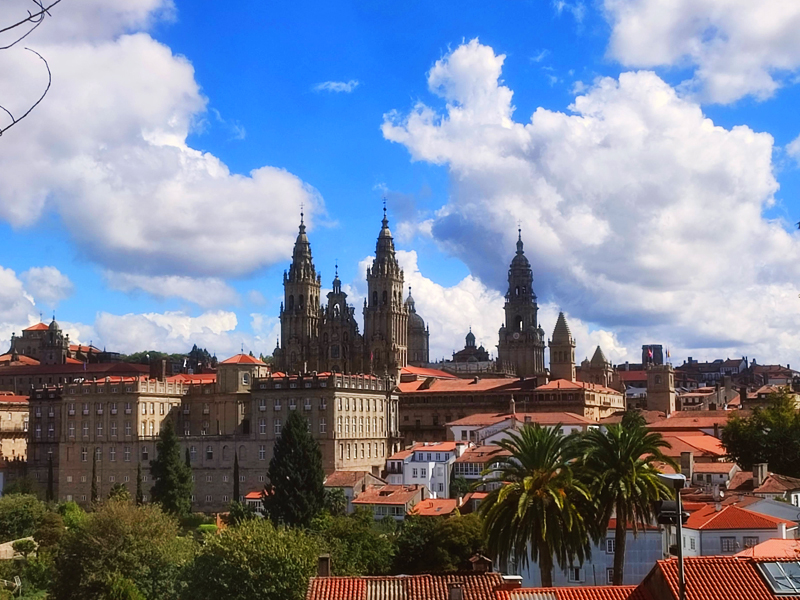
Beyond the must-see tourist sites, Santiago houses a series of fascinating but lesser-known places that promise an authentic and memorable experience. Here are some of the lesser-known places to visit in Santiago. that will give you an excellent understanding of the history and life of this city.
Pazo de Fonseca
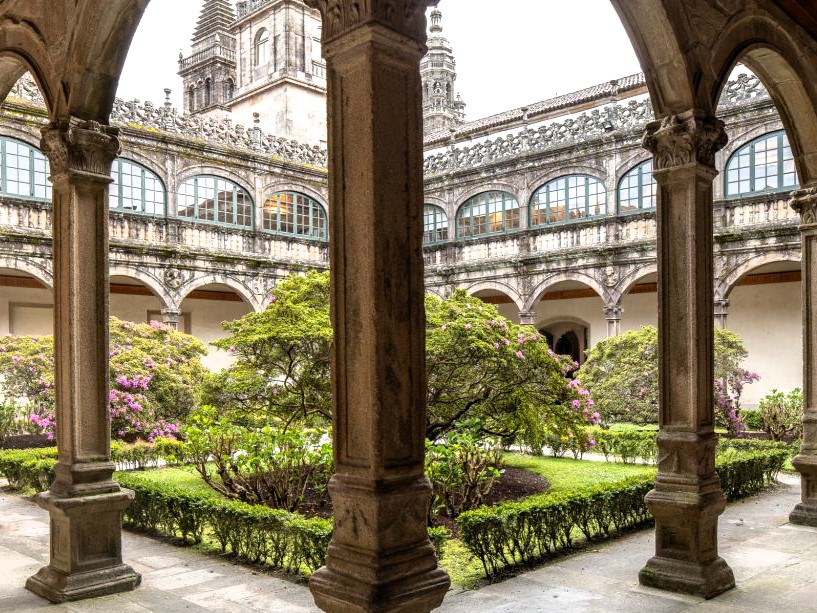
Speaking of good grades, we start with the Colegio de Fonseca, which can be considered the birthplace of the University of Santiago de Compostela. It was founded in the 16th century for the teaching of Arts, Theology, Civil Law, and Canon Law. In Renaissance style, inside we can visit the Sala de Grados or one of the most beautiful cloisters in Santiago, from which one can access the valuable University Library. To the right of the façade, we can find the sculpture of the "Tree of Knowledge" that houses a curious tradition of walking three times around the sculpture and pointing to one of its branches while facing away. This will reveal the discipline you should dedicate your life to. This pazo therefore holds many stories worth discovering. It is one of those lesser-known places to visit in Santiago.
Hostal de los Reyes Católicos
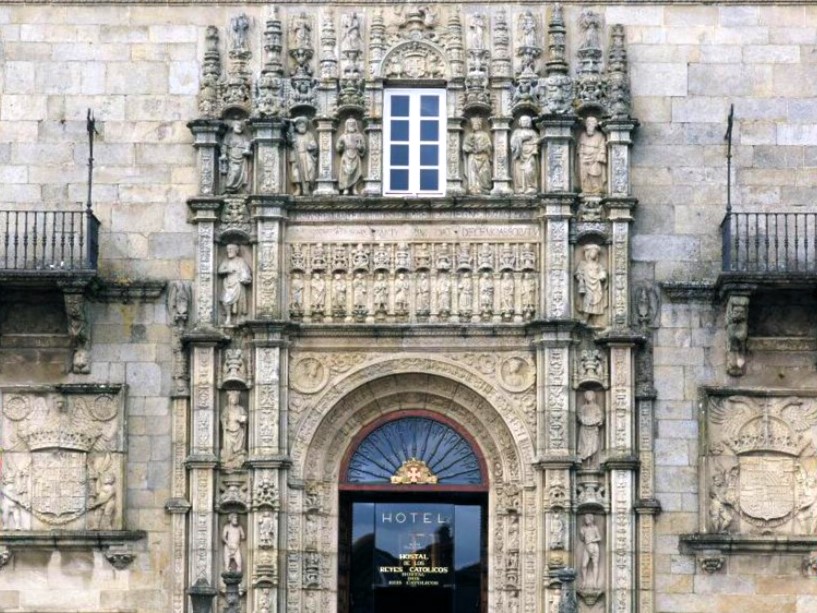
It was built in the 16th century by order of the Catholic Monarchs to welcome and treat pilgrims who wandered sick through the city streets. Its style is halfway between late Gothic and Renaissance. Its façade stands out, especially the ornate upper cornice. Inside we find the chapel, in Gothic-Renaissance style, surrounded by four beautiful courtyards acting as cloisters. In 1954, it transitioned from being a hospital to being part of the National Network of Paradores. Currently, modern pilgrims maintain a curious privilege. Follow the link to discover what it is. The Parador offers self-guided tours of the chapel and cloisters.
Monastery and Church of San Martín Pinario
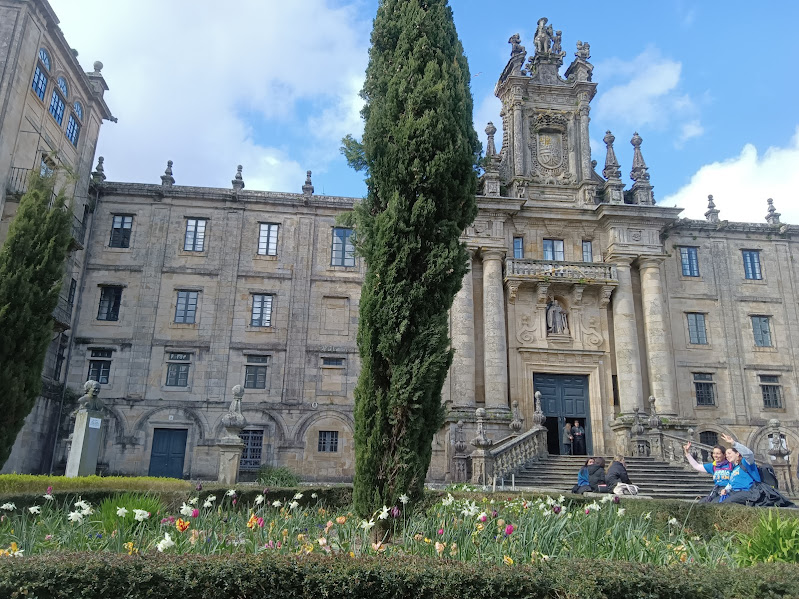
The monastery was founded in the 10th century to house the monks responsible for guarding the relics of the Apostle. You can access the monastery from the Plaza de Azabachería. Around its interior cloisters from the 17th and 18th centuries, there are visitable collections and some of its rooms are also used as exhibition spaces. The visit to the church and the Diocesan Museum allows you to admire some of the best altarpieces of Spanish Baroque or the ancient coral wooden stalls of the Cathedral. The baroque façade of the church and the curved, descending staircase from the 18th century stand out. The Museum organizes its own guided tours.
Costa Vella Café
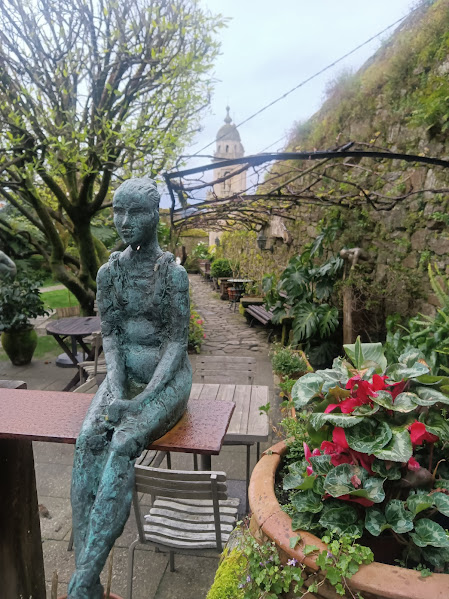
A stop on our journey will lead us to discover another one of Santiago's hidden treasures where we can recharge with positive energy in this beautiful urban garden located in the Hotel Costa Vella. Here you will be able to isolate yourself from the urban hustle and enjoy the beauty of its plants and trees, the sounds of its birds. You can take a deep breath and spend some time in this bucolic place that takes you to distant lands but is close to everything that there is to see in Santiago. Enjoy a delicious coffee surrounded by beauty.
San Fiz de Solovio Church
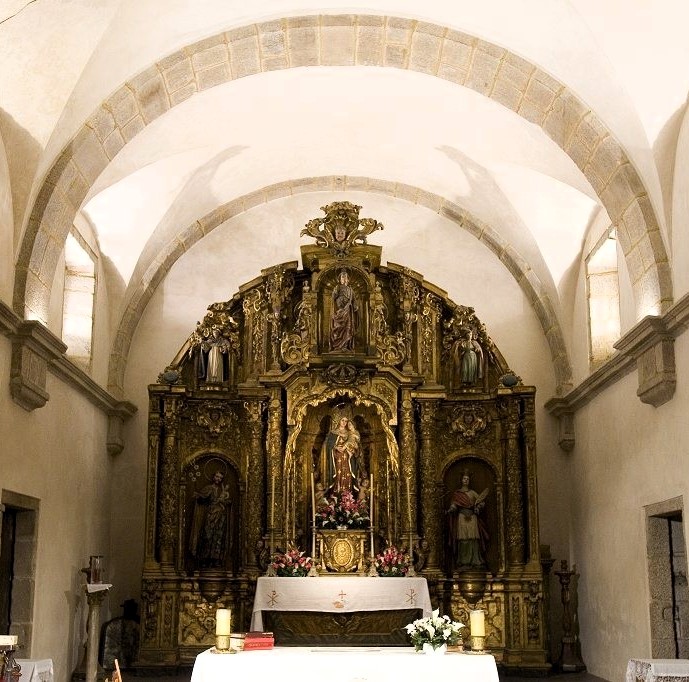
Another lesser-known place to visit in Santiago is this church, of which legend says it was the first church in Santiago. In the 9th century, the hermit Paio lived here, who decided to take refuge in the beautiful and isolated landscapes of Galicia to dedicate himself to contemplation and penance. According to legend, one night during his prayers, he saw lights, approached them, and found the remains of the Apostle. It is worth visiting for its portico and, once inside, for the tomb of Cardinal Lopo González de Carballido and for the statue of the Virgin of Miracles.
Wine Gate or Mazarelos Gate
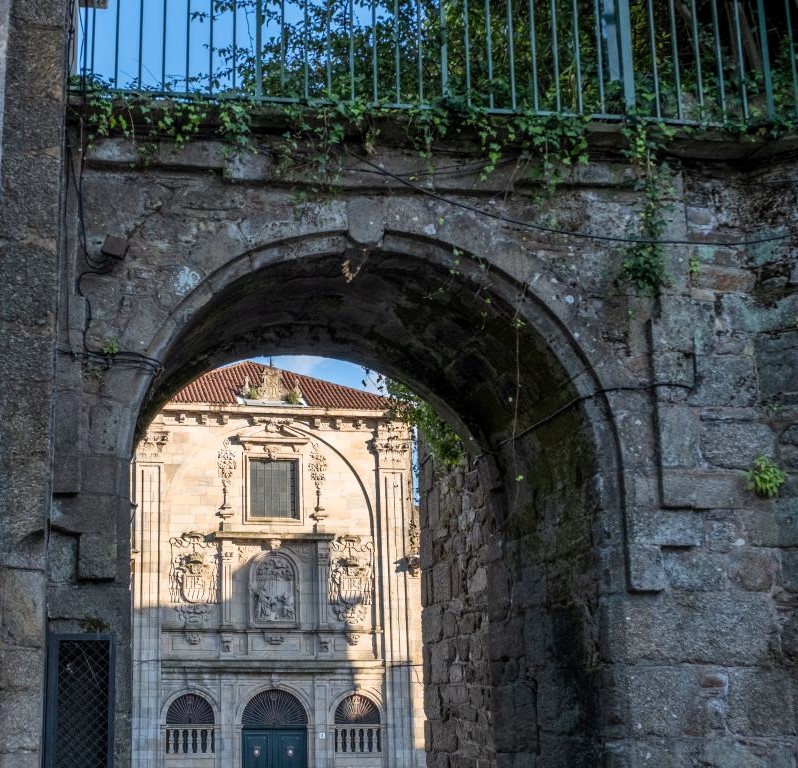
It is the only arch that has been preserved from the medieval wall that surrounded the nucleus of Santiago. This fortress from the 11th century was demolished in the 19th century and had seven main doors to control the access of people and goods. Through the Mazarelos arch, pilgrims coming from the south of the peninsula, cereals from Castilla, and Ribeiro wine entered. Due to its current proximity to the University, this area is fantastic for enjoying typical and affordable taverns.
Santiago de Compostela is a city full of history where, in addition to the must-see visits, you can discover lesser-known places that are full of history and beauty. Here we have suggested some hidden treasures that will complement and enhance your stay in this beautiful city and also in this link you will find other suggestions from our website.
Credits for the main image: Costa Vella Hotel Garden