
This guide is specially designed for Argentinians traveling to Spain, whether to traverse the Camino de Santiagoor to enjoy the country in general. We know that every trip is experienced better when you arrive with clear and practical information. That’s why we’ve gathered in these pages tips, details, and recommendations that can save you time, money, and complications. From documentation and health to local customs and safety, here you will find the essentials to make your experience in Spain easier, safer, and more enriching.
The idea is that you have everything necessary at hand, from before leaving Argentina to your return, so you can focus on what’s most important: enjoying every moment of your adventure.
Tips for Argentine tourists in Spain.
Recommendations, tips, and local culture

NECESSARY DOCUMENTS FOR ARGENTINE TOURISTS TO TRAVEL TO SPAIN
PASSPORT
Travel with the latest copy of the passport (regardless of whether an earlier version with still-valid expiration date is held). Please note that the issuance of a later passport invalidates the previous travel document, regardless of their expiration dates.
- Check the expiration date of the passport. The travel document must be valid for at least three months beyond the expected departure date from the Schengen Area and must have been issued within the last ten years prior to the date of entry.
- – If continuing travel to a third country, check if it requires an entry visa, and if the visa needs to be processed in the interested party's place of residence (Argentina).
Even in cases where the Argentine citizen enters Spanish territory with a European Union passport, it is recommended to bring their corresponding valid Argentine passport in luggage.
Additionally, in October 2025, the EES system for EU entries/exits will be implemented. This is for those who do not have a European passport (with exceptions). You can find complete info on this page: https://travel-europe.europa.eu/es/ees/ltr
ID Card
The Argentine ID Card is the only means of proof of the holder's identity for any procedure or transaction that must be carried out before Argentine authorities, including this Consulate. Therefore, it is recommended that all Argentine citizens entering Spanish territory carry it in their luggage, for those cases where further processing at this Consulate is necessary (for example, issuing an emergency passport) (Source: Argentine Consulate in Cádiz)
OTHER DOCUMENTS
- Proof of sufficient economic means (currently 118.40 euros per person per day, with a minimum of 1,065.60 euros) for staying in Spain and returning or traveling to another country (Entry may be allowed by reducing the length of stay in proportion to the economic resources, through diligence in the passport or analogous document).
- Justifying documents for the verification of the entry conditions. Foreign nationals must, if required, specify the reason for their application for entry and stay in Spain. Among them, and for trips of a tourist or private nature, a document justifying the existence of accommodation available to the foreign national: either issued by the accommodation establishment or consisting of invitation letter from a private individual.
- Presentation, if applicable, of the health certificates.
- Not be subject to a entry ban.
- Not pose a danger to public health, public order, national security, or the international relations of Spain or other States with which Spain has an agreement in such regard.
They may be requested
- Proof of accommodation: Hotel reservation or invitation letter from a person residing in Spain.
- Travel insurance: Minimum medical coverage of 30,000 euros, valid across the Schengen area. Remember that tour insurance only covers the dates of the tour and may not meet the requirements. If you haven't purchased insurance yet, we can provide a no-obligation quote.
- Proof of accommodation: Hotel reservation or invitation letter from a person residing in Spain
- Sufficient funds: Proof of financial means to cover the stay, such as cash, credit cards, or bank statements.
- Purpose of the trip: Justification of the purpose of the trip, such as tourism, business, or family visits.
- No prior records: Not having been denied entry into Schengen countries previously.
- *Source: Ministry of the Interior
DRINKING WATER IN SPAIN
The tap water in Spain is potable in almost all areas, including Galicia, and meets European quality standards. It can be safely consumed in hotels, bars, restaurants, and homes.
- Taste and quality: In some regions (especially in the Mediterranean coast and in Madrid) the water may have a stronger taste due to mineralization, but it remains safe. In Galicia, it is usually of very good quality and milder to the palate.
- Public fountains: In cities and in many sections of the Camino de Santiago, there are fountains marked with potable water. It is always advisable to check the signs: if it is not potable, it will be clearly indicated.
- Bottled water: Available at any supermarket and gas station, at low prices, and somewhat more expensive in bars or kiosks.
- On the Camino de Santiago: It is advisable to carry a reusable bottle and refill it at potable water fountains or hostels. This saves money, reduces plastic waste, and ensures hydration during the hike.
CURRENCY EXCHANGE
If you need to exchange dollars for euros, it is easier to do so at the airport or at exchange offices in large cities. In Galicia and small towns, there are hardly any exchange offices, and banks usually do not accept foreign currencies over the counter unless you are a customer.
On the Camino (except in Santiago de Compostela) you will not find exchange offices, so it is advisable to arrive with some cash in euros or a card enabled for international use. Argentine pesos are not accepted, and only exceptional places accept dollars, so the most practical option is to pay with a card in stores or withdraw euros directly from an ATM. The latter is usually more convenient than going to an exchange office, as many charge high commissions or unfavorable exchange rates. Check with your bank before traveling if they have an agreement with any specific ATM.
SAFETY

Spain is one of the safest countries in Europe and the world. According to official data, the crime rate is around 51.3 crimes per 1,000 inhabitants.
In Galicia, the autonomous community where the Camino de Santiago passes through, crime is even lower. In 2024, the Civil Guard registered only six criminal offenses along the Portuguese Camino route in Pontevedra, while performing 7,000 assistance and support services, with the participation of 12,000 agents.
The Camino de Santiago is considered a safe route. Statistics indicate that since 1993, there have been 31 fatal accidents on the Camino, with no murders reported during the pilgrimage. Moreover, 85% of pilgrims feel safe during their journey.
HEALTH IN SPAIN AND THE CAMINO DE SANTIAGO
Traveling with peace of mind also means knowing how the healthcare system works and what to do in case of emergency:
- Emergencies: The unique number throughout the European Union is 112. It is available in Spanish, English, and other languages, and coordinates ambulances, fire services, and police.
- Hospitals and health centers: Spain has a public healthcare system of very good quality. However, Argentine citizens do not have free access, as this benefit is only for residents or citizens of the EU with the European Health Card. On the Camino de Santiago within Galicia, we are always about 20/30km at most from any health center. Additionally, in the towns that are endpoint stages, especially on the French Way, there are usually free Red Cross booths.
- Private care: For those traveling from Argentina, medical care is usually private and costs can be high (a consultation can range from €80 with a general practitioner).
- Travel medical insurance: It is not mandatory to enter Spain if you are Argentine (due to the Schengen visa waiver agreement), but it is highly recommended to cover medical emergencies, accidents, or luggage loss.
- Pharmacies: Very easy to identify by the bright green cross. They sell over-the-counter medications (pain relievers, syrups, etc.) as well as prescription drugs. Operating hours are usually from 9:00 AM to 9:00 PM, with rotating on-call pharmacies during the night and weekends.
CUSTOMS, ETIQUETTE AND TIPS
In Spain, schedules and social norms can differ quite a bit from Argentina. The main meal, the xantar or lunch, is usually between 1 PM and 3 PM, while dinner is served later, around 9 PM to 10 PM. It is common to greet with two kisses on the cheek, though among men, a handshake is customary.
It is also advisable to respect queue norms, public spaces, and maintain a moderate tone of voice, especially on public transport.
In restaurants in large cities or during peak season, it is recommended to make reservations by phone.
Tips are not mandatory, but it is customary to leave 5-10% of the total in restaurants if the service has been good; in bars or cafes, leaving the change is appreciated. Leaving the change when having a coffee or a beer is well-regarded. Tips are left in cash and are not included on the card.
For prepaid guided tours, if the guide has been very good, you can tip between €3 and €5. In free tours, we suggest starting at €10 per person. Accompanying guides for a 5-6 day tour: from €5 per day, depending on the category of the tour. Discretionary bus drivers: €1 per day, depending on the category of the tour.
CONNECTIVITY AND TELEPHONY
Staying connected in Spain is easy, but it's good to know the options before traveling:
Argentinian roaming: Companies in Argentina offer roaming plans in Europe, but they tend to be expensive and with few gigabytes. They are useful for emergencies or short trips.
Local SIM cards (recommended). A more economical option is to buy a Spanish or European SIM card. Companies like Orange, Vodafone, Movistar, or virtual ones like Simyo, Digi, or Lycamobile offer prepaid plans from €10-€20 with calls and several gigabytes of data. Additionally, if your trip continues through Europe, there are also European options. You can see comparisons here.
eSIM: Some operators and apps (e.g., Airalo, Holafly) allow you to activate a digital data plan before traveling, avoiding the need to change the physical SIM.
Free Wi-Fi: Hotels, cafes, airports, and many bars offer free connectivity, although it may be slower.
On the Camino de Santiago: Most hostels and accommodations offer free Wi-Fi. However, in rural areas, there may be little mobile coverage, so if you are traveling alone, it's a good idea to download offline maps and use apps that work without an internet connection.
ELECTRICITY
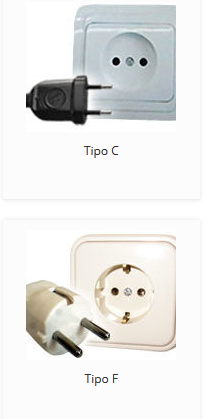
In Spain, type C and F plugs are used, with a voltage of 230 V and a frequency of 50 Hz. If your devices have flat plugs (like those used in Argentina) or different connectors, you will need an adapter. Many phone and laptop chargers are dual voltage, but it is always a good idea to verify this to avoid damage. Carrying a universal adapter can save you from inconveniences during your trip.
SHOPPING, PAYMENTS, AND BUSINESS HOURS
In Spain, store hours can vary greatly depending on the city and region:
Small shops and businesses: They usually open from 10:00 AM to 2:00 PM and from 5:00 PM to 8:30/9:00 PM, closing at noon for the "siesta", especially in small towns and cities. In the Sol area of Madrid, shops are also open on Sundays, from about 11 AM to 10 PM.
Large stores and shopping centers: They normally open from 10:00 AM to 9:00/10:00 PM from Monday to Saturday, without a midday closure. Sundays and holidays: Most shops close, except for supermarkets in tourist cities or gas stations with mini-markets. In Madrid and Barcelona, some shopping centers open on Sundays.
Supermarkets: Large chains like Mercadona, Carrefour, Lidl, or Gadis (in Galicia) usually open from 9:00 AM to 9:30 PM. Some close at noon in smaller towns.
Traditional markets: Highly recommended for trying fresh products. They usually open only in the morning (8:00 AM–2:00 PM).
Banks: Bank offices open between 9 AM and 2 PM approximately. This may vary in other autonomous communities. Banks do not open in the afternoon or on Saturdays or Sundays. In some large cities, there may be branches with extended hours, but this is not common. For over-the-counter transactions, you need to go early in the morning. This is also true for transfers, cash deposits, and other in-person transactions.
Payments: You can pay with a card practically everywhere, even in small bars, as long as you are in a reasonably large city. However, it is highly recommended to carry some cash, especially on the Camino de Santiago.
Beyond the tips and preparations, what will really mark your experience in Spain is the way you open yourself up to the new: sharing a table, letting yourself be surprised by the landscapes, getting lost in ancient streets, or conversing with local people. Every detail adds to memories that last a lifetime. May this guide serve as a travel companion, but let your curiosity and desire to discover pave the true path.
The recommendations in this post they are not sponsored.