
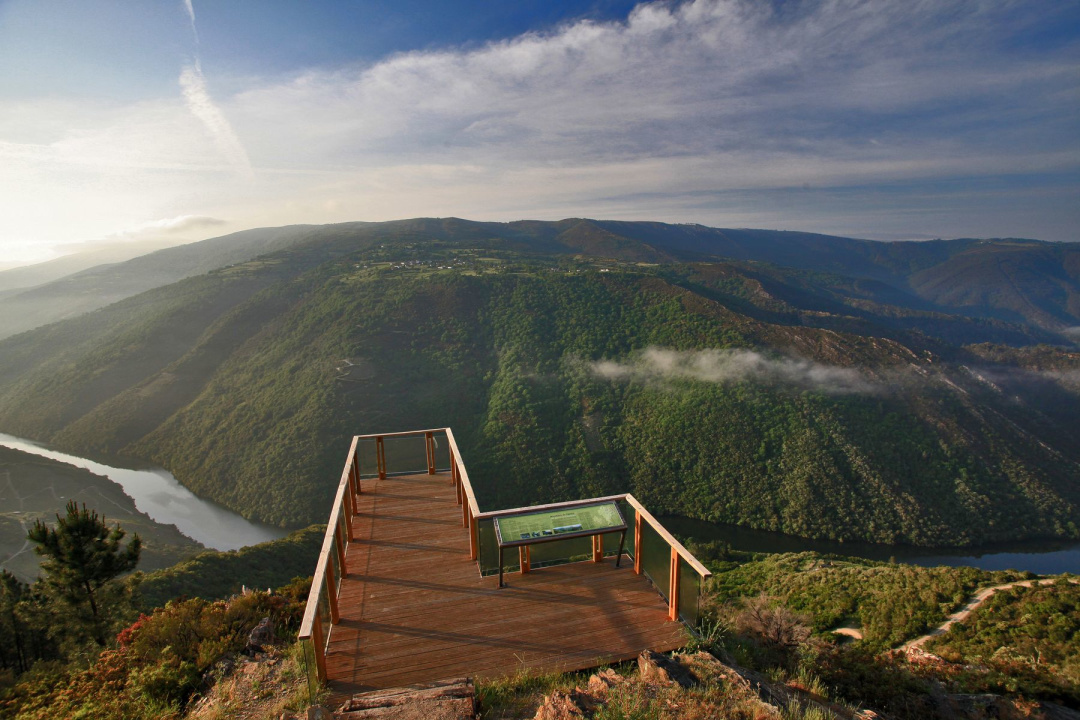
A deep gorge cuts through the land. At the top, Romanesque monasteries overlook the horizon, and a handful of viewpoints offer magnificent landscapes. Below, oaks, chestnuts, and vineyards cover the steep slopes. Everything in the Ribeira Sacra invites you to breathe, to relax, to feel alive. Allow me to show you why the Ribeira Sacra is a candidate for World Heritage status, and a perfect destination to escape from the world.
Ribeira Sacra means the sacred banks of the river. In fact, the magic of this land revolves around 2 great rivers: the Miño and the Sil
The Sil River carves granite walls up to 600 meters high in some areas over its last 35 km. Then, it joins the Miño River near Os Peres. The natural force of the Sil is softened by some dams, which allow for pleasant boat rides, a wonderful way to explore the canyon.
One complete route in the region should include: monasteries, viewpoints and nature, vineyards, traditional villages, and local cuisine.
By how many days ? Consider at least 5.
The Monasteries
The area is considered the largest concentration of rural Romanesque architecture in all of Europe, with 85 Romanesque monasteries, 18 of which are open to visitors.
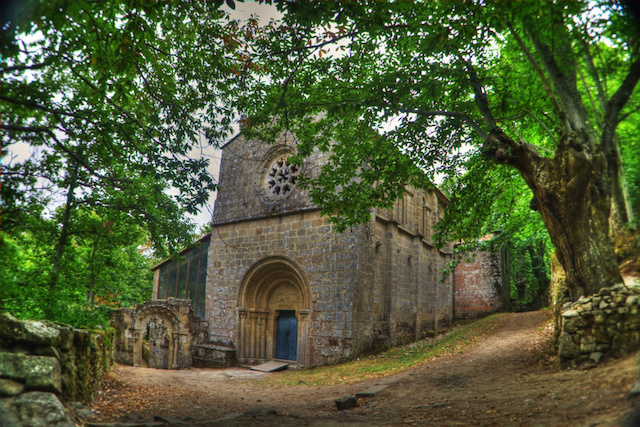
Why so many monasteries, and what was the purpose of building them? The fertile soils, the mystery, the tranquility and the invitation to retreat of this area attracted monastic orders from the very beginning of Christianity. In the Middle Ages, monks knew how to make use of the land and brought order to the territory. We can now follow in their footsteps, trying to find the same charm and pleasure of a serene retreat journey.
Santo Estevo De Ribas de Sil, Santa Cristina de Ribas de Sil, and San Pedro de Rocas are the most notable monasteries in the region.
Santo Estevo is located in the heart of the Ribeira Sacra, and was once one of the most powerful monasteries in the area: up to 9 bishops chose to spend their last days there. It preserves its baroque facade, its church, and a Romanesque apse with 3 cloisters from different periods: Renaissance, Romanesque, and Gothic.
Currently the monastery is a luxurious hotel (it belongs to the prestigious Paradores chain), where you could eventually stay.
Santa Cristina De Ribas de Sil is one of those magical places that manage to remain in the memory of those who visit. Surrounded by a chestnut forest, the monastery, built in the late 11th century, is located on top of a bend in the Sil River.
San Pedro de Rocas emerges as if cast in the large stones. It was probably one of the first places where the solitary life of hermits transformed into communal life.
The Lookouts
At least 36 incredible lookouts can be counted in the Ribeira Sacra, distributed along the two main rivers: the Miño and the Sil.
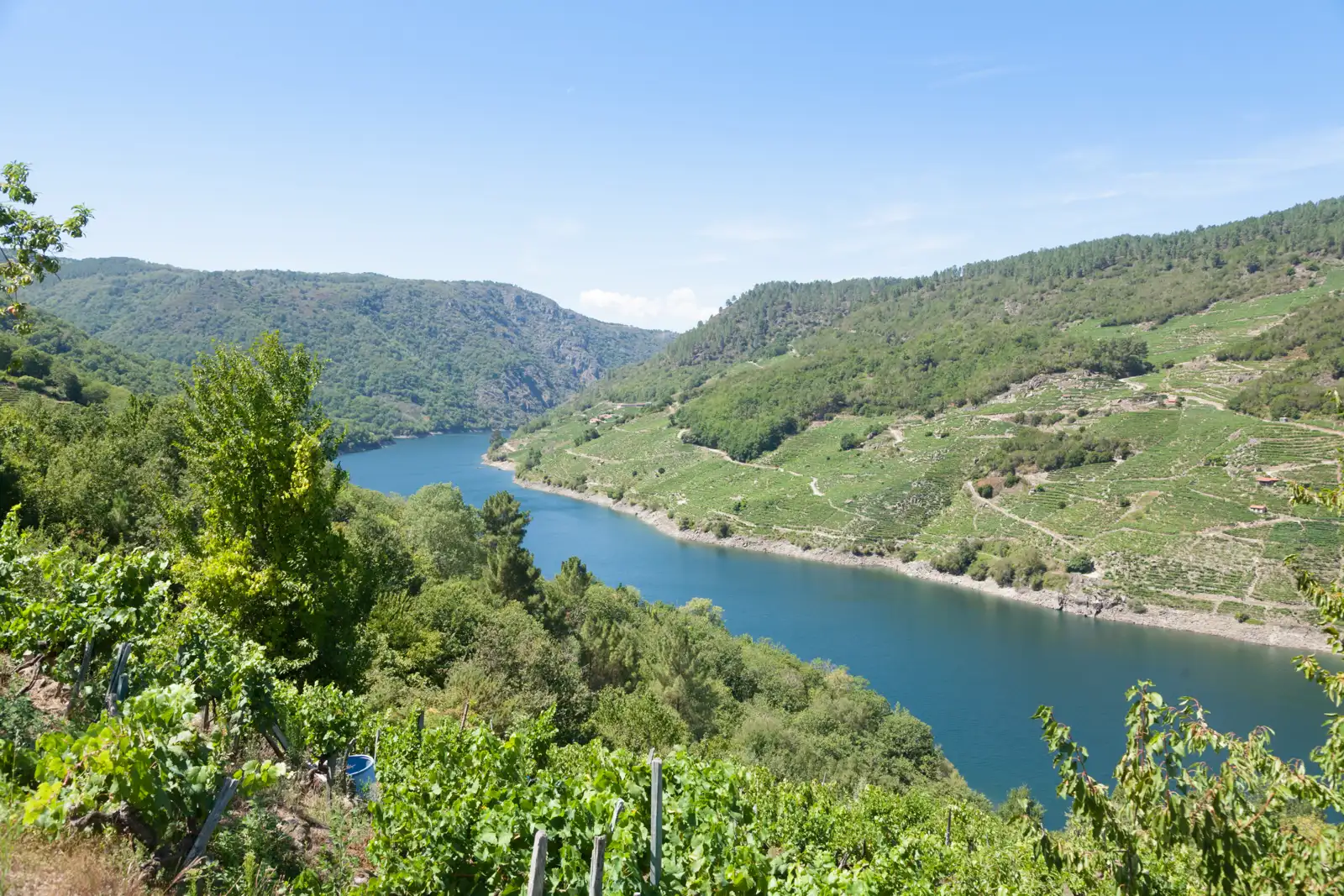
It could take a long time to stop at each one, so it’s a good idea to choose a few, especially if the visit to the area is for a short period of time. The following are my favorites:
- Cabo do Mundo and Cabezoás, the first over the meander most famous of the Miño River; the second, overlooking another meander, of the Sil River, in this case.
- Pena do Castelo, A Capela, and As Penas de Matacá, offering the best views of the cultivated terraces over the river.
- And the "in style": The Sunsetting Bambán and the swing of the Terra Brava wineries. They are two swings with views, a delight for Instagrammers and bloggers. The one at Bodega Terra Brava is the only private one, visitable as part of the tour of the winery.
The Viewpoints
How many places can you visit from different viewpoints?
In the Ribeira Sacra it's possible. From top to bottom:
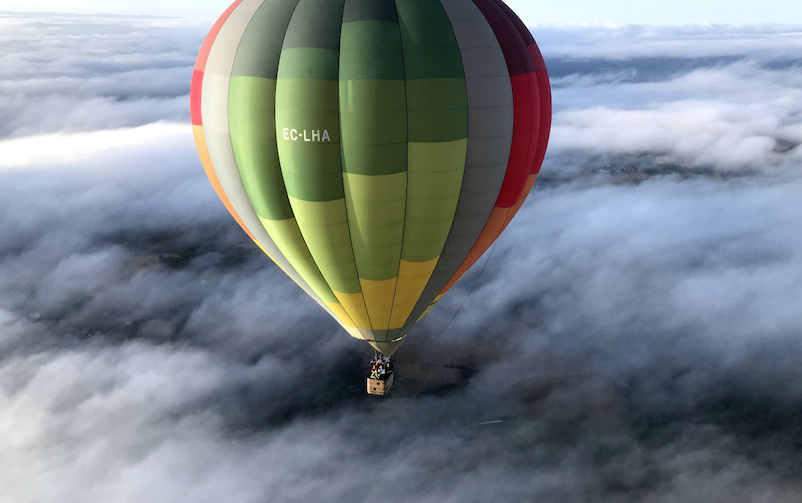
- fly in a balloon over the vineyards, with the light of dawn as witness. Jump into a hot air balloon and float over the magnificent landscape. There are 3 companies that offer this experience, flying for (approximately) an hour. I recommend www.aerotours.com
- Drive up and down the mountains, stopping at the viewpoints.
- Take a boat ride. Navigate the waters of Miño or the Sil, a pleasant way to get to know Ribeira Sacra from the water. If you go at sunset, the trip will be perfect. There are several companies operating on both sides of the rivers.
The Vineyards
Ribeira Sacra exists for, and because of, wine.
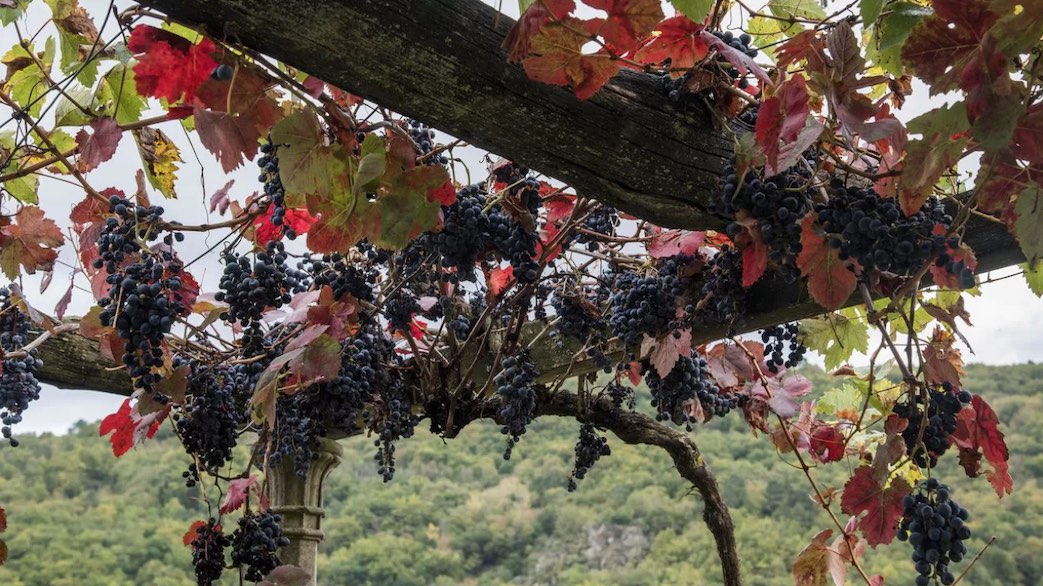
The Romans found gold in these lands, but they left us something in return. They likely combined the local vines with Mediterranean ones, thus improving the grape varieties. What’s more, it is said that the Caesars requested our wines.
The tradition continued with monks improving and promoting winemaking, cultivating steep terraces of land at angles of 50 to 85%. Some of them are still only accessible by boat today. Winemaking thus became the economic engine of these lands. And it still is.
Visiting a winery is absolutely essential to understand the local way of life. There are many small wineries, family businesses, scattered across the 3 wine regions: Amandi, Ribeira do Miño, and Ribeira do Sil. Choose one (or two, or three), and let your senses take over.
The Traditional Villages
Are there any big cities in the region? Luckily, no. Tranquility is guaranteed.

There are 3 notable towns and a city that you should visit.
Monforte de Lemos. Being a railway hub gave Monforte the status of a city. Well connected, it lies in the geographical center of the Ribeira Sacra, making it a good choice for accommodation and planning outings from there. Don’t leave the city without taking a walk along the River Cabe and discovering the Galician Escorial: Our Lady of the Antiquity; the ancient castle and the Tower of Tribute.
Portomarín is an important town on the Camino de Santiago. I often say that the Camino acts like the railway for rural areas: towns flourish where it passes. Small restaurants, hotels, and shops spring up.. Even some cities emerged in the Middle Ages from the Camino.
Now, pay attention: the Portomarín you see? It is the new Portomarin. The old one is submerged under the waters of the reservoir. The main buildings, including the church of San Juan, were previously moved stone by stone to the new location.
Chantada, a traditional town that treasures Romanesque heritage. The main square is surrounded by traditional houses with wooden balconies and arcades. If you are lucky enough to visit Chantada on the market day, the 5th and 21st of each month, you can enjoy an authentic experience: a market like the ones from before. A group of Romanesque churches will complete the visit: San Salvador de Asma, Santa María de Pesqueiras, or Santa María de Nogueira.
Castro Caldelas overlooks the Edo river from the top of the hill. To reach its castle, located in the center of the town, you will need to walk uphill on its cobbled streets lost in time.
Nature
You won't take long to discover that Ribeira Sacra is a paradise for hikers.
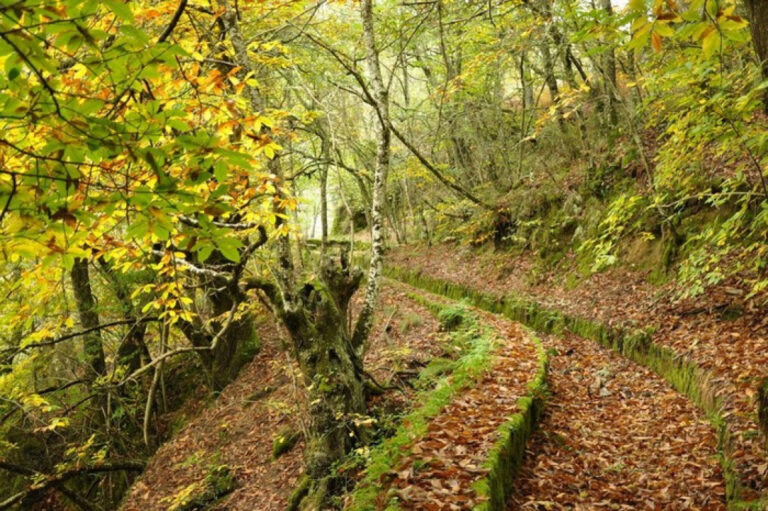
There are numerous incredible and well-marked trails. You can also follow any (there are many) close to your accommodation, but I would like to recommend my 3 favorites:
- the route of Santa Cristina (PR-G 98), circular, with wonderful views over the Sil canyon, and cultural sponsorship.
- the route of the vineyards of Belesar (PR-G 183), short, easy, and passing through vineyards.
- the route of the Mao River Canyon (PR-G 177), my favorite. Circular, and somewhat demanding, but certainly worth it.
The recommendations in this post are not sponsored, but personal opinion. For more practical information you can also see this another post.
Where to sleep
In the area, there is an incredible range of unconventional accommodation to choose from.

What would you think about sleeping in an ancient monastery? Santo Estevo de Ribas de Sil it's a spectacular ancient monastery converted into a 4-star hotel.
Or in a vineyard? Fazenda Pradio offers the possibility to relax surrounded by vineyards.
Or maybe in a Rectory ? Rectory of Chandrexa is a cozy ecological rural hotel, with only 3 rooms.
Additionally, you can find many more options for rural accommodation: whole houses or by room, small hotels, camps... and in the previously mentioned villages.
Ribeira Sacra is one of the most complete and unknown destinations, that even amazes the most experienced travelers. You will leave there with a full stomach, a smile on your lips, and a satisfied heart. I promise. It happens to me every time I go.
Most of the images are courtesy of Tourism Ribeira Sacra, where you can also find information.